
Ultimate Quality Assurance Guide: Meaning, Certification, Courses & Career Opportunities
Introduction
Quality is one of the most crucial elements of any organization’s success. It’s true for training institutes, health care providers, manufacturing companies, and educational institutes as well – when you ensure that you set high standards, you also ensure that you are building trust and improving performance. Quality Assurance (QA) is here to help.
Quality assurance isn’t merely a process of looking for errors. It’s a proactive process that is about making things work, avoiding mistakes, achieving uniformity and repeatability. Improved quality assurance can help an organization improve efficiency, meet industry standards and provide better results.
We will discuss what quality assurance is, why it’s important, what are the quality assurance certifications available, and some potential career paths and what is the difference between quality assurance and quality control.
What Is Quality Assurance?
Quality Assurance is a process that helps make sure that products, services or systems are always good enough. This means they have to meet the standards that people expect from them.
Quality Assurance is about making things better so that problems do not happen in the place. It is better to fix things before they go wrong than trying to fix them after the work is done. Quality Assurance is really about improving Quality Assurance processes so that Quality Assurance works properly.

Quality Assurance Meaning
In simple terms, quality assurance meaning refers to all the planned and organized activities that help maintain and improve quality.
For example:
- A training provider regularly updates course materials.
- A hospital follows strict patient safety procedures.
- A software company tests its development process before releasing new features.
These activities are undertaken for quality and reliability.
What is QA and why is it important?
Quality assurance is used to ensure consistency, minimize errors and boost customer confidence.
The benefits of quality assurance are numerous:
| Benefit | Description |
| Consistency | Delivers reliable results and services |
| Customer Confidence | Builds trust through quality performance |
| Reduced Errors | Prevents defects before they occur |
| Improved Compliance | Supports industry standards and regulations |
| Continuous Improvement | Encourages ongoing development |
Additional Benefits
- Improves operational efficiency
- Reduces waste and rework
- Enhances organizational reputation
- Supports risk management
- Strengthens decision-making processes
Quality Assurance and Quality Control
Many people confuse quality assurance and quality control, but they serve different purposes.
Quality Assurance vs Quality Control
| Quality Assurance | Quality Control |
| Focuses on processes | Focuses on products |
| Prevents defects | Detects defects |
| Proactive approach | Reactive approach |
| Continuous activity | Inspection-based activity |
| Improves systems | Checks results |
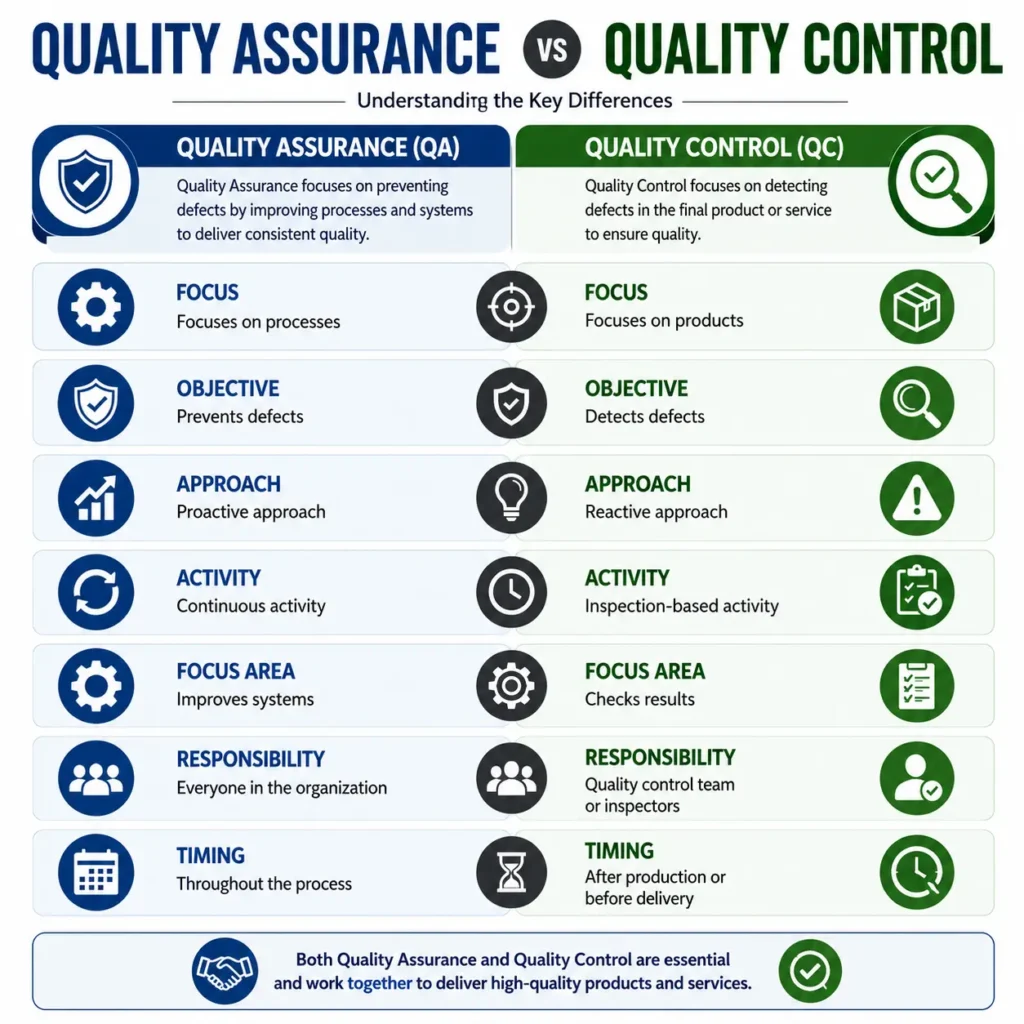
Difference Between Quality Control and Quality Assurance
The main difference between quality control and quality assurance is that the former recognizes flaws in completed work, whereas the latter avoids any flaws by applying efficient procedures.
Example
A training institute may use:
Quality Assurance
- Course development procedures
- Instructor training standards
- Regular content reviews
Quality Control
- Student assessments
- Feedback analysis
- Final course evaluations
Both are important and work together to improve quality.
Core Principles of Quality Assurance
Successful quality assurance systems are built on several key principles.
Customer Focus
Organizations need to know what their customers want and try to meet their expectations all the time.
Process-Based Approach
When you have processes in place you can get the same results over and over again. This is because defined processes help you achieve reliable and repeatable results.
Leadership Commitment
The people in charge need to support quality standards. Management support is essential for maintaining quality standards. Without it things can go wrong.
Continuous Improvement
Making sure things are quality is something that never ends. Quality assurance is a process that seeks opportunities for improvement. You always need to look for ways to do things better.
Evidence-Based Decisions
You need information to make good decisions. Reliable data and performance measurements support decision-making. This means you can trust the decisions you make.
Quality Assurance Certification
Getting a quality assurance certification shows that you are good at your job and you know about quality management practices. A quality assurance certification demonstrates competence and knowledge of quality management practices.
Numerous firms prefer to employ those with this certification. This is because the certified professionals are knowledgeable about quality systems and continuous improvement principles. They do what they can to make things better and stay that way. Many organisations favour certified professionals as they know the principles of quality systems and continuous improvement.
Benefits of Quality Assurance Certification
- Professional credibility
- Career advancement opportunities
- Improved knowledge of quality systems
- Better understanding of compliance requirements
- Increased earning potential
Who Should Consider Certification?
- Quality managers
- Supervisors
- Auditors
- Compliance officers
- Operations professionals
- Quality specialists
Quality Assurance Courses
Quality assurance courses help professionals develop practical skills and knowledge related to quality management and process improvement.
Topics Commonly Covered
- Quality management principles
- Auditing techniques
- Risk management
- Process improvement
- Compliance requirements
- Performance measurement
These courses are helpful to both a novice and an expert.
Careers in Quality Assurance.Careers in Quality Assurance.
The need for skilled quality professionals is rising in various sectors.
Popular Quality Assurance Jobs
| Job Role | Responsibilities |
| Quality Assurance Specialist | Keeps and enhances quality systems. |
| Quality Assurance Engineer | Establishes and implements technical quality standards and tracks their adherence. |
| Quality Manager | Responsible for quality programs |
| Internal Auditor | Assesses for compliance & performance |
| Compliance Officer | Responsible for ensuring that the regulatory requirements are adhered to. |
Quality Assurance Specialist
The duty of a quality assurance specialist is to make sure that quality processes are monitored, chances for enhancement are identified and standards are fulfilled.
Quality Assurance Engineer
The quality assurance engineer is responsible for technical quality requirements, process optimization, and typically works in the manufacturing, engineering or software industry.
Quality Assurance Jobs
Today, quality assurance jobs are available in:
- Healthcare
- Education
- Manufacturing
- Information Technology
- Construction
- Aviation
- Food Safety
Quality Assurance in Education
Quality assurance in education helps ensure that training programs, teaching methods, and assessments meet academic and professional standards.
Benefits
- Better learning outcomes
- Improved teaching quality
- Enhanced student satisfaction
- Compliance with accreditation requirements
- Continuous improvement of educational programs
Educational institutions that prioritize quality assurance can provide more effective learning experiences.
Quality Assurance in Healthcare
Quality assurance in healthcare focuses on maintaining patient safety and improving healthcare services.
Key Areas
- Patient safety
- Clinical procedures
- Staff competency
- Compliance management
- Service improvement
Strong quality assurance systems help healthcare providers deliver safe, reliable, and effective care.

Best Practices for Effective Quality Assurance
Organizations can strengthen quality assurance through:
Establishing Clear Standards
Documented procedures create consistency and clarity.
Conducting Regular Reviews
Periodic evaluations help identify improvement opportunities.
Investing in Training
Employee training supports quality awareness and compliance.
Monitoring Performance
Performance indicators provide valuable insights into quality levels.
Encouraging Continuous Improvement
Organizations should continuously review and improve their processes.
The Future of Quality Assurance
Technology continues to transform quality assurance practices.
Emerging Trends
- Automated quality monitoring
- Artificial intelligence applications
- Data-driven quality management
- Enhanced compliance systems
- Greater focus on customer experience
Organizations that adopt modern quality assurance practices can remain competitive and improve long-term performance.
Conclusion
To ensure standards, enhance the performance, and attain long-term success, quality assurance is critical. The quality assurance meaning, investing in quality assurance certification and taking quality assurance courses can assist both organizations and professionals to reach greater levels of quality.
Quality assurance is the backbone of consistent and reliable results whether you’re looking into quality assurance jobs, a career as a quality assurance specialist or quality assurance engineer or simply looking to enhance organisational performance.
Frequently Asked Questions
What is quality assurance?
Quality assurance is a process to ensure that products and services are of a quality and satisfactory standard. It is a system which verifies whether these products and services meet the standards set.
What is the difference between quality assurance and quality control?
While the main difference between quality assurance and quality control is that quality assurance attempts to avoid mistakes from happening at the place. On the other hand quality control after finishing work for errors.
Why is quality assurance important?
Quality assurance is important because it helps to make sure that things are consistent and don’t have errors. This makes customers happy. Trust the products and services more. It also helps to make things better over time.
What is a quality assurance certification?
A quality assurance certification is a certificate that shows someone knows a lot about making sure things are good quality. It means they understand how to manage quality and do their job well.
Who should take quality assurance courses?
People who work with quality like quality managers and auditors should take these courses. Also people who want to learn more about quality, like supervisors and compliance professionals can benefit from them.
What does a quality assurance specialist do?
A quality assurance specialist checks the systems that’re in place to make sure things are good quality. They look for ways to make things better and help make sure everyone is following the rules.
What is the role of a quality assurance engineer?
A quality assurance engineer focuses on the side of things. They make sure that products and services meet the requirements and that the testing processes are good. They also help to make things better over time.
What is education’s approach to quality assurance?
Quality assurance in education can ensure high quality teaching and learning. It also helps to ensure that schools are complying with the rules and standards.
Why is quality assurance important in health care?
Quality assurance in healthcare is important because it helps to keep patients safe. Ensure that the care they receive is good and that the rules are being followed in hospitals and clinics.
What industries use quality assurance?
Many industries use quality assurance, including healthcare, education, manufacturing and construction. It is also used in information technology, aviation and many other industries. Quality assurance is used in any industry where things need to be made sure they are good and work well.