
Quality Management in Saudi Arabia: Building Stronger Businesses Through Excellence
Introduction:
In the present competitive business world, organisations in Saudi Arabia have become more and more aware of the necessity to ensure quality, customer satisfaction and international standards. From construction to healthcare, manufacturing to logistics, and technology to everything in between, businesses are realizing the importance of effective quality management and how it is essential to their success.
Structured systems that boost performance, minimize waste, and enhance customer satisfaction are being invested in by organizations as Saudi Arabia continues to undergo its economic transformation as outlined in Vision 2030. This is where a soundly crafted quality management system is crucial.

What is Quality Management?
In essence, quality management is a set of processes, policies and practices that organizations employ to ensure that their products and services consistently fulfill customer needs and industrial requirements.
Quality management is not about solving problems once they have arisen, but it’s about making them scarce, making things more efficient, and fostering a culture of continuous improvement.
Good quality management is important in helping organisations:
- Improve customer satisfaction
- Reduce operational errors
- Increase productivity
- Enhance business reputation
- Meet regulatory requirements
- Support long-term growth
This course covers the basics of a QMS, the concepts and principles behind it, and how it drives business success.
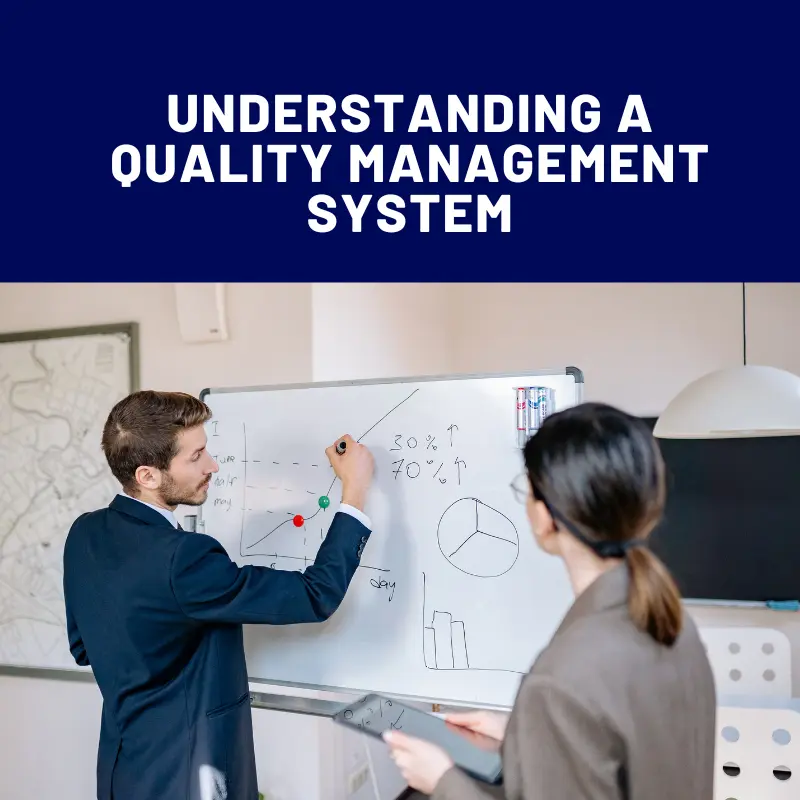
Understanding a Quality Management System:
A quality management system (QMS) is a structured framework for managing and improving the quality of all aspects of the organisation’s operations.
A typical QMS would consist of:
- Quality policies and objectives
- Documented procedures
- Risk management processes
- Employee training programs
- Internal audits
- Performance monitoring
- Corrective and preventative actions (CAPA)
With the adoption of a QMS, organizations can establish consistency, enhance accountability, and ensure the focus on quality is maintained throughout the company.
The Evolution of Total Quality Management:
Among the most important models of quality improvement is the Total Quality Management (TQM).
TQM is a management philosophy that is about continuous improvement across the entire organisation. TQM is different from the approach of traditional quality control practices which focus on identifying quality defects as they arise and recording them, because it advocates that all employees work together to enhance quality.
The basic principles of TQM are:
1. Customer Focus
It is important for a business to know the expectations of its customers and continuously meet and surpass those expectations.
2. Employee Involvement
Quality is everyone’s responsibility and it’s not the responsibility of management alone.
3. Continuous Improvement
Processes should continually be reviewed and made better to produce better results.
4. Data-Driven Decision Making
Facts, measures and performance data should be used to guide business decisions.
5. Process-Based Approach
Organizations need to concentrate on processes, not just on fixing the results.
(TQM) principles are applied by many successful companies in Saudi Arabia to enhance the performance of their operations and sustain a competitive edge.
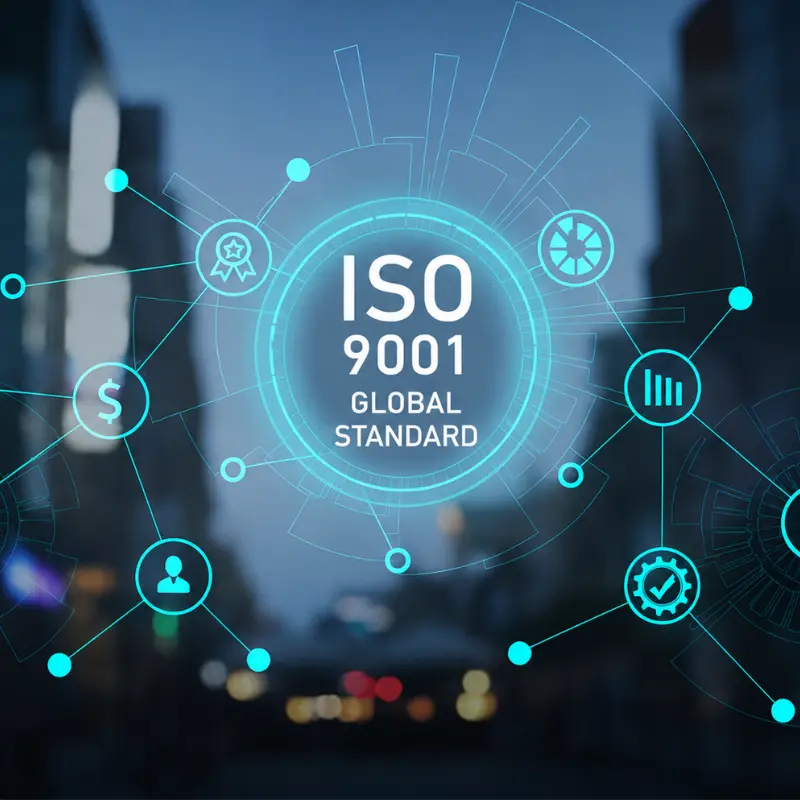
The Global Standard for quality management system is ISO 9001:
However, among all standards discussed under the umbrella of quality management, one of them stands tall, namely ISO 9001 quality management system.
ISO 9001 is the most adopted quality management system standard in the world. It offers an organisation a solid structure and process to develop, implement, sustain and continually improve a QMS.
The ISO 9001 quality management system is organized around a number of quality principles, such as:
- Customer focus
- Leadership commitment
- Process approach
- Risk-based thinking
- Continuous improvement
- Evidence-based decision making
Such companies that have adopted ISO 9001 will find that these are some of the benefits:
- Improved customer confidence
- Better operational efficiency
- Reduced costs and waste
- Increased business opportunities
- Stronger market credibility
If your business is in Saudi Arabia, you’ll find it to be a great advantage to have ISO 9001 certification when bidding for contracts, winning business, and seeking to grow your business overseas.
In Saudi Arabia, why Quality Management Matters?
Saudi Arabia is undergoing a lively economic growth and diversification. In a competitive environment and growing industries, companies need to uphold the quality standards to stay successful.
Quality Management ensures businesses:
1. Meet Customer Expectations
Today’s customers want quality products and services. A robust quality system is beneficial to organizations to ensure they consistently satisfy those expectations.
2. Improve Operational Efficiency
Clear processes mitigate errors, eliminate waste and enhance productivity.
3. Support Vision 2030 Goals
Effective ISO quality system practices are crucial to Saudi Arabia’s Vision 2030 initiative, which focuses on innovation, efficiency, and global competitiveness.
4. Strengthen Business Reputation
Quality is a major factor in attracting customers, partners, and investors to organizations that are known for their quality.
Quality Management Certification: Why It Matters
A recognized quality management certification is a certificate that proves that an organization adheres to internationally accepted quality standards.
There are a number of advantages to certification:
- Enhanced customer trust
- Increased credibility
- Better business opportunities
- Improved compliance
- Competitive advantage
Organizations that are certified by a QMS are often chosen by many clients and government agencies to ensure that there are processes in place to guarantee quality.
Career Opportunities: Quality Manager Jobs in Saudi Arabia
The need for quality professionals is increasing as more companies are being quality driven. This has led to good employment prospects for those interested in quality manager jobs in Saudi Arabia.
The role of a quality manager is very crucial in:
- Developing quality strategies
- Managing QMS
- Conducting audits
- Monitoring compliance
- Implementing continuous improvement programs
The industries with high demand for quality managers are:
- Construction
- Manufacturing
- Healthcare
- Oil and gas
- Logistics
- Information technology
Experts in ISO standards, auditing and process improvement can find lucrative career opportunities in the Saudi market.
Common Challenges in Quality Management:
Although there are a number of benefits being provided by quality management, organisations can face certain problems while implementing.
Such difficulties may include:
- Resistance to change
- Employees not engaged
- Insufficient training
- Poor documentation
- Inconsistent process monitoring
Companies that solve these problems with leadership and employee engagement will be more likely to be successful in the long-term.
Best Practices for Successful Quality Management:
In order to get the best results, businesses should:
1. Establish Clear Quality Objectives
Establish measurable objectives that are consistent with business priorities.
2. Invest in employee training.
The employees must be aware of their role and responsibilities in the QMS.
3. Conduct Regular Audits
An audit can be used to help identify areas for improvement and ensure compliance.
4. Monitor Performance Metrics
Data-driven decision making helps for continuous improvement.
5. Promote a Quality Culture
Quality needs to be ingrained in the whole organisation and not just a part of a function.
The future of quality management in Saudi Arabia:
With the modernization of Saudi Arabia’s economy, quality management will continue to play a key role in the success of businesses. Businesses that have adopted quality philosophies, have invested in their personnel’s education and have adopted the international benchmarks for quality system will have an advantage in the local and global marketplaces.
Whether it’s a small business or a large multinational company, quality system offers a tangible method to ensure operational excellence, customer satisfaction, and sustainable growth.
Conclusion:
Quality is not an objective but a process of excellence that will be ongoing. An effective quality management system, TQM and a quality management certification can help an organisation to improve performance, gain customer trust and provide value to their customers.
No matter your goals, like improving your operations, adopting an ISO 9001 QMS or considering quality manager jobs in Saudi Arabia, the investment in quality management is important for future success.
Frequently Asked Questions
What is meant by quality management?
The process of assuring that the products and services consistently fulfill customer expectations and industry standards and supporting continuous improvement.
Define what is meant by the term Quality management system?
A quality management system (QMS) is a method of managing and enhancing the quality, which implements a system of policies, processes and practices.
Total Quality Management (TQM) is what?
One way of achieving this is to strive for continuous improvement, satisfy customers’ needs and involve employees across the organisation – this is known as Total Quality Management (TQM).
What is the importance of ISO 9001 in Quality Management?
It is an International standard (ISO 9001) that provides a quality management system to help enhance quality, customer satisfaction and efficiency.
Why is quality Management certification important?
The quality management certification will help the organizations improve their credibility, their customers’ confidence and even an advantage over their competitors.
Are there any qualified positions of QAs in Saudi Arabia?
As more and more emphasis is being put on quality and compliance in organisations, there is a need for the role of quality managers in various industries, including construction, manufacturing, health, logistics and oil & gas.