Essential ISO 27001 Guide: Certification, Lead Implementer & Framework
Introduction
Information is a vital asset for any organization in today’s digital era. Every day, businesses gather and keep sensitive information such as documentation of customers, employee information, financial details, contracts, and other private business information. With the increasing threat of cyber attack, safeguarding its important infrastructure has become a first priority for everyone, from big to small. Here, the ISO 27001 comes into play. It is the most widely accepted standard for Information Security Management Systems (ISMS) that is used by organizations to safeguard sensitive data, manage security risks, and build customer confidence.
Whether you’re a small firm, a multinational entity, or even a government organization, the adoption of ISO 27001 certification demonstrates commitment towards information security and continuous improvements.
As regards ISO 27001 certification in Saudi Arabia, this internationally acknowledged standard will help in complying with regulations, improving the level of cyber security and enhancing the reputation of your organization in the fast-paced environment.
This document will serve as an introduction into ISO 27001, working of ISO 27001, benefits of ISO 27001, implementation process of ISO 27001 and why it is becoming crucial for organizations operating in Saudi Arabia.
What Is ISO 27001?
ISO 27001 refers to an international standard which has been set up by ISO in collaboration with IEC. The name of the standard is ISO/IEC 27001 and it provides a framework to organisations for the implementation and improvement of their Information Security Management Systems (ISMS).
Whereas ISO 27001 is more concerned with people, processes, technology and risk management, it is not only a cybersecurity software standard. This keeps the sensitive information safe, and helps businesses stay alive and customers feel good.
The standard can be applied by organizations of all sizes and in all sectors, such as in the finance, healthcare, education, manufacturing, retail, government and information technology sectors.
ISO 27001 Meaning
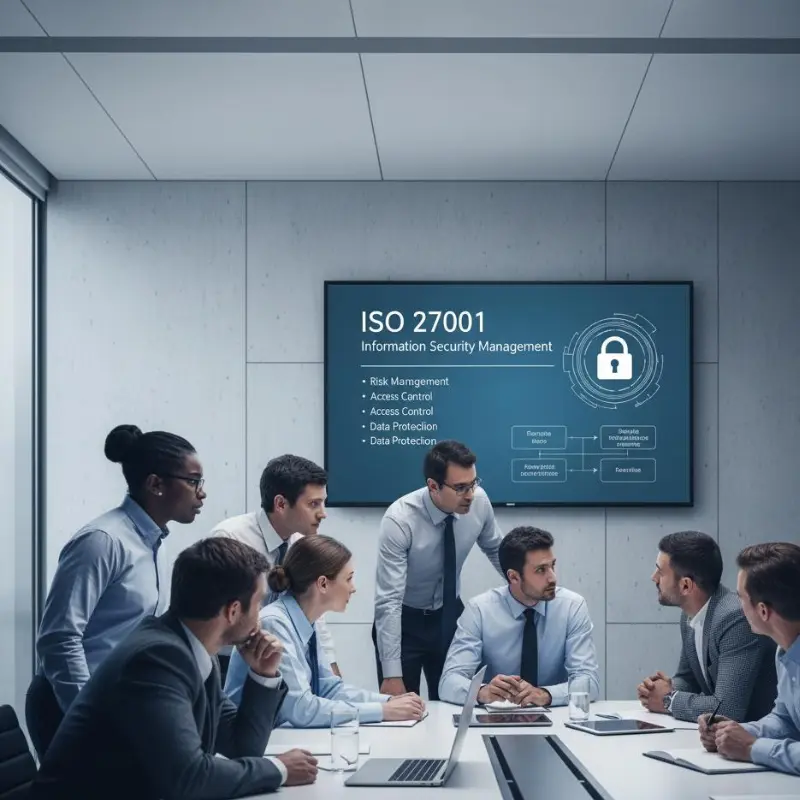
The main concern among many organizations before implementation of ISO 27001 is what ISO 27001 means.
In simple terms, ISO 27001 is a global standard that guides organizations on how to analyze the potential risks to their information system and implement proper controls to protect sensitive information from any form of misuse.
Unlike dealing with the situation after it occurs, ISO 27001 gives organizations a proactive platform through which they can assess the potential risks, implement proper controls and monitor their Information Security Management System.
In doing so, organizations will be able to protect sensitive information and gain the customers’ confidence.
Why Information Security Matters
Information is crucial to the functioning of every organization. Customer databases, employee records, financial reports, contracts and even intellectual property are assets that need protection.
If businesses are not secure, they can be subject to:
- Data breaches
- Cyberattacks
- Financial losses
- Business interruptions
- Legal penalties
- Loss of trust from the customer.
- Damage to their reputation
Adopting ISO 27001 could help organizations minimize these risks by establishing a structured system for information security management. The standard is not just a technical document, it also covers employee awareness, processes and improvements.
As Saudi Arabia’s businesses embrace digital transformation and cloud adoption, robust information security practices have also become more crucial.
Understanding the ISO 27001 Framework
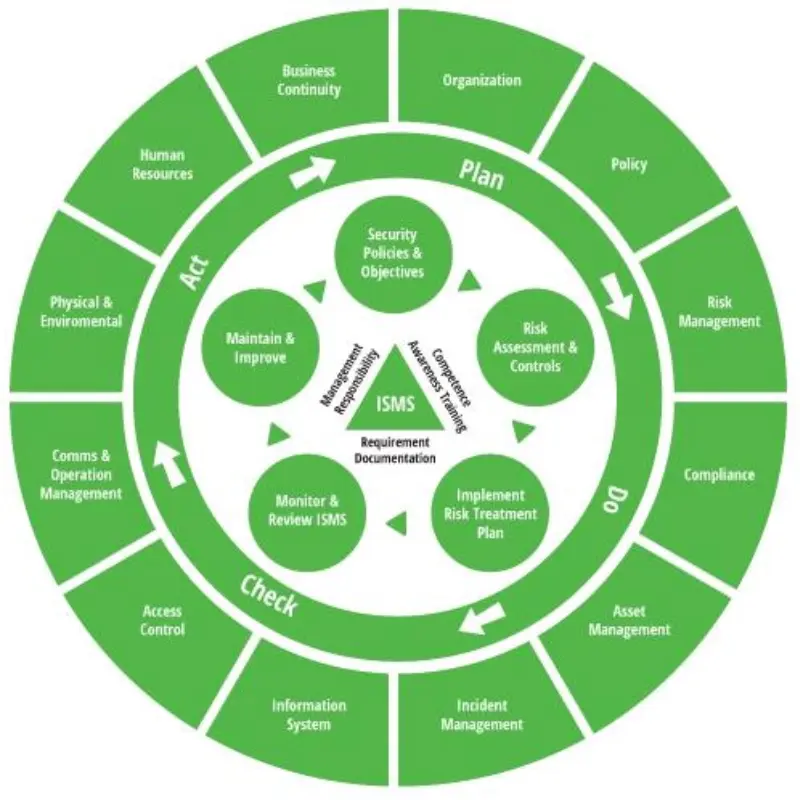
The ISO 27001 framework offers a systematic method for handling info security threats throughout an organization.
The framework does not deal with information security as a discrete topic, but it brings information security into the day-to-day business.
The framework focuses on:
- Identifying information assets.
- Assessing security risks.
- Implementing security controls.
- Establishing security policies and procedures.
- Training employees.
- Monitoring system performance.
- Conducting internal audits.
- Continually improving the Information Security Management System.
This risk-based solution allows businesses to safeguard data where it matters most while meeting evolving threats and business needs.
What Is ISO/IEC 27001?
ISO 27001 and ISO/IEC 27001 are used interchangeably and there is no difference in their meaning.
ISO/IEC 27001 is the standard’s proper name because it is created by the International Organization for Standardization (ISO) and the International Electrotechnical Commission (IEC). This international collaboration ensures that the standard follows global best practices in the field of information security management.
Benefits of ISO 27001
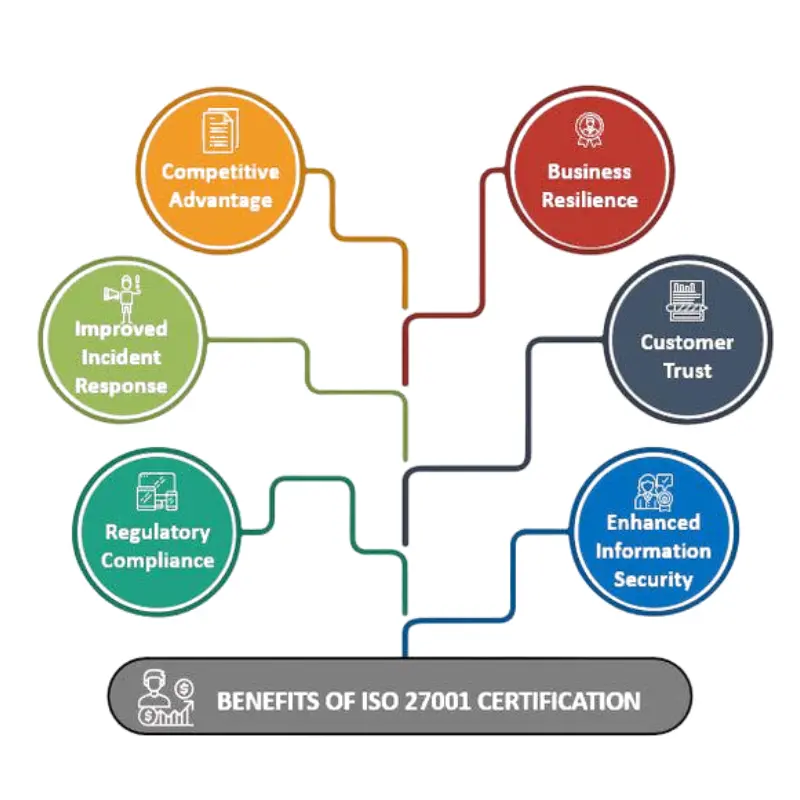
Compliant with ISO 27001, it is so much more than cybersecurity. It enhances the business resilience, customer trust and overall business performance of organisations.
| Benefit | How It Helps Your Business |
| Improved Information Security | Safeguards valuable business and customer information. |
| Better Risk Management | Detects and mitigates security threats before they are incidents. |
| Increased Customer Trust | Shows a sensitivity to the needs of confidentiality |
| Regulatory Compliance | Ensures that there is compliance with the legal requirements. |
| Decreased Cybersecurity Risk | There will be minimal chances of data theft or cyberattacks. |
| Business Continuity | Helps organizations prepare for security breaches. |
| Competitive Advantage | Increases their credibility with customers and business partners. |
ISO 27001 certification is definitely an advantage for those organizations which need to enter into information security agreements on the basis of international standards.
Who Should Implement ISO 27001?
The great advantage of ISO 27001 is its flexibility. It may be implemented by any size of organization from any sector.
The following are common ISO 27001 implementers:
- Information Technology (IT) companies.
- Cloud service providers
- Financial institutions
- Healthcare organizations
- Government agencies
- Educational institutions
- E-commerce businesses
- Manufacturing companies
- Telecommunications providers
- Consulting firms
The significance of ISO 27001 certification in Saudi Arabia includes the use of the Information Security Management System (ISMS) for protecting sensitive information, improving the level of cybersecurity, and ensuring compliance with the best practices on an international level. Also, thanks to the ISO 27001 standard, companies can enjoy enhanced customer trust and additional business prospects due to the digital economy development of the country in accordance with the Vision 2030 plan.
ISO 27001 Certification
The ISO 27001 certificaion provides proof of the efficiency of the Information Security Management System (ISMS), which satisfies the criteria for the ISMS at an international level. The certificate gives you the opportunity to have an independent check to prove your commitment towards securing sensitive information.
For various companies, certification is not just a compliance requirement, but it is also a method of generating trust with customers, business partners, and stakeholders. It can also enhance your competitiveness, particularly if you are dealing with clients that need globally accepted information security standards.
ISO 27001 Accreditation
Many people believe that an ISO 27001 accreditation is a certification, but it differs.
Certification is given to an organisation once they have passed an external audit to the ISO 27001 standard. Accreditation, however, is issued to the certification bodies by recognized accreditation organizations which indicates their competence to issue ISO certifications.
Organizations should always look for an accredited certification body when choosing a certification provider so that their ISO 27001 certification is recognised and trusted throughout the world.
ISO 27001 Implementation
Implementing ISO 27001 is a process that needs to be planned, led by commitment from the management, and involves employees. Along with technology, there are policies and procedures, people and risk management involved.
The typical process of implementation consists of:
| Step | Description |
| Define Scope | Identifying the departments, locations and information assets that are covered by the ISMS. |
| Conduct Risk Assessment | Recognize the threats and vulnerabilities of information security. |
| Develop Security Controls | Apply the necessary measures to help minimize identified risks. |
| Create Policies | Implement information security policies and procedures. |
| Train Employees | Make sure staff are aware of their security duties. |
| Perform Internal Audits | Check the effectiveness of the Information Security Management System. |
| Certification Audit | Go for an external audit to get the ISO 27001 certification. |
These are some ways to create an effective security culture and continuously improve the Information Security Management System of an organization.
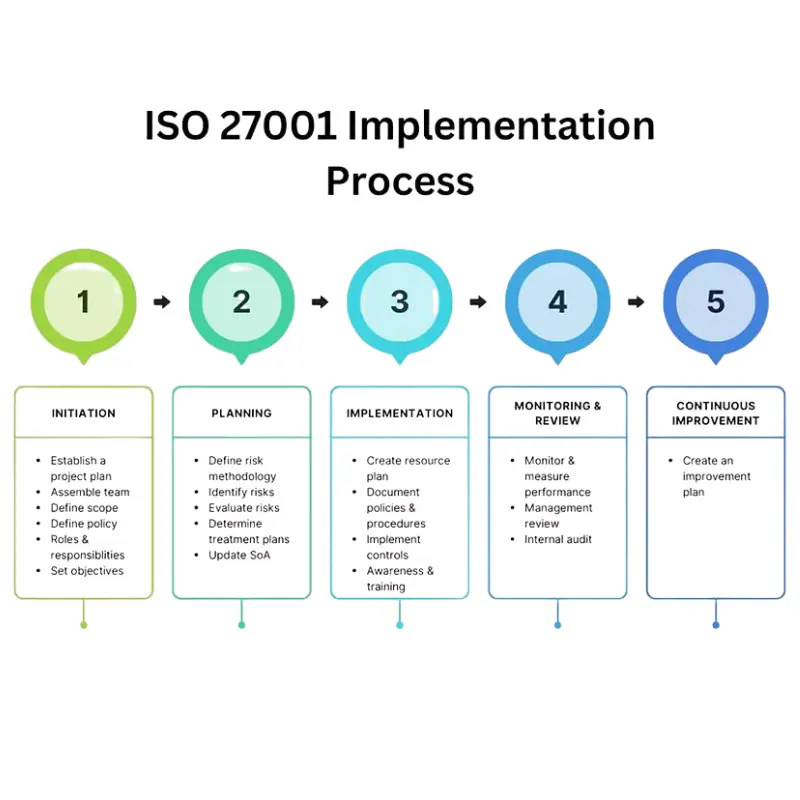
ISO 27001 Lead Implementer
The job of an ISO 27001 Lead Implementer is to plan, develop and implement an Information Security Management System according to the ISO 27001 standards.
Some of their duties include:
- Designing the project for implementation.
- Conducting risk assessments.
- Developing security policies.
- Managing documentation.
- Training employees.
- Monitoring implementation progress.
- Training the organization to meet certification examinations.
Qualified lead implementers are often enlisted by the organization to help them have a smooth and successful implementation process.
ISO/IEC 27001 Lead Implementer
The ISO/IEC 27001 Lead Implementer qualification is intended for experts who want to gain hands-on experience in the design and implementation of an Information Security Management System.
Typically, a professional training course will include instruction in:
- ISO/IEC 27001 requirements
- Risk assessment techniques
- Information security controls
- Documentation requirements
- Implementation planning
- Performance monitoring
- Continual improvement
It is beneficial for information security managers, consultants, IT professionals, compliance officers and those who are responsible for implementing ISO 27001 in an organization.
ISO 27001 Lead Auditor
An ISO 27001 Lead Auditor determines whether an organization’s Information Security Management System meets the requirements of ISO 27001.
Lead auditors are a critical part of the audit team and their responsibilities include:
- Preparing audit plans.
- Reviewing policies and procedures.
- Interviewing employees.
- Assessing security controls.
- Identifying non-conformities.
- Preparing audit reports.
- Recommending corrective actions.
Accredited lead auditors are usually used by organizations to keep in alignment and constantly improve information security methods.
ISO 27001 Lead Auditor Certification
First, second, and third party auditors may be certified as an ISO 27001 Lead Auditor by accredited training providers.
The course builds practical auditing skills such as:
- Audit planning
- Audit execution
- Evidence collection
- Interview techniques
- Reporting findings
- Corrective action follow-up
- ISO auditing principles
Employers value this accreditation in finding highly qualified information security auditors.
ISO 27001 Foundation
The ISO 27001 Foundation course is intended for those who are new to Information Security Management Systems.
It explains the fundamental principles of ISO 27001 which are:
- Information security principles
- Risk management
- ISMS requirements
- Security controls
- Roles and responsibilities
- Continual improvement
It is a great bridge between Learner and Lead Implementer/Lead Auditor training.
ISO 27001 PDF
The number of professionals who look for an ISO 27001 pdf online to comprehend the standard before implementation is very high.
Although there are educational resources and guidance documents that can be found online, organisations should always have the latest and most accurate requirements, so please make sure to get the official ISO/IEC 27001 document from an ISO/IEC 27001-authorized source.
The official standard ensures that organisations can implement an effective Information Security Management System and be successfully prepared for certification.
Conclusion
In view of the increased uptake of digital technologies in organizations, now more than ever before, there is an urgent need for securing sensitive information. The ISO 27001 structure provides an opportunity to control information security risks, preserve valuable information, and increase customers’ confidence.
The implementation of ISO 27001, the ISO 27001 Certification in Saudi Arabia, or training internal staff in ISO 27001 Lead Implementer/Lead Auditor Certification can be an excellent investment in the future of any business.
Adoption of ISO/IEC 27001 by organizations will assist them to improve their cybersecurity processes, achieve compliance with the regulation requirements, manage information security risks, and demonstrate their commitment to information confidentiality in the digital age.
Frequently Asked Questions
What is ISO 27001?
ISO 27001 is a known international standard. It helps companies keep their data safe.The ISO 27001 standard provides a framework to manage security risks. This framework helps secure company data.ISO 27001 is really about securing data and managing risks.
Will 27001 certification benefit the organization?
Yes, absolutely. When your business is ISO 27001 certified, you will prove your commitment to information security and generate extra business opportunities for your organization.
Is ISO 27001 implementation complicated?
ISO 27001 implementation requires effort, but it does not have to be complicated at all. If implemented properly, any enterprise can implement the standard effectively.
How does ISO 27001 Certification differ from ISO 27001 Accreditation?
A company can receive ISO 27001 certification if it meets all ISO 27001 requirements. Once the company adheres to the ISO 27001 requirements, the company receives its certification. Certification bodies meet the requirements of ISO 27001 and get accredited because of their ability to conduct certification audits.
Who needs ISO 27001 Lead Implementer training?
ISO 27001 Lead Implementer training course would be a perfect match for people playing an active part in implementing the ISO/IEC 27001 Lead Implementer project such as IT managers, security specialists, consultants, etc.
What is an ISO 27001 Lead Auditor?
ISO 27001 Lead Auditor makes sure that the organization meets the requirements of the ISO/IEC 27001. Getting an ISO 27001 Lead Auditor certification would allow one to conduct such an audit.
Can ISO 27001 Foundation Training be helpful for beginners?
Yes, absolutely. The ISO 27001 Foundation Training gives an insight into the field of information security management.
Can I access the ISO 27001 PDF free of charge?
The official ISO 27001 PDF is not free of cost but must be purchased through ISO and certified standards providers. Nevertheless, many organizations provide a free guide for better understanding.