Risk Assessment: Meaning, Steps, Types & Importance in Workplace Safety
What is a Risk Assessment?
A risk assessment is a systematic way of looking at hazards in the workplace, at the level of risk and then at the necessary control measures to prevent accidents or harm.
In simple words, what is a risk assessment? It is a way to understand “what can go wrong” and how to make the workplace safer.
The risk assessment definition can be summarized as:
A systematic approach to hazard identification, risk assessment and safety measures.

Why Risk Assessment is Important
A safety risk assessment is an important, critical process that helps ensure that the workers are safe, there are fewer accidents, and that the workers meet safety standards such as ISO 45001.
It helps organizations:
- Prevent workplace accidents
- Improve safety culture
- Identify weak points in processes
- Meet legal and ISO requirements
- Protect employees and assets
Types of Risk Assessment
There are different types of risk assessment depending on the workplace:
- Qualitative Risk Assessment
- Quantitative Risk Assessment
- Generic Risk Assessment
- Site-Specific Risk Assessment
- Dynamic Risk Assessment
These types are effective in managing risks under varying circumstances.
Risk Assessment Steps (5 Steps to Risk Assessment)
It is extremely important for safety professionals to understand the risk assessment steps.
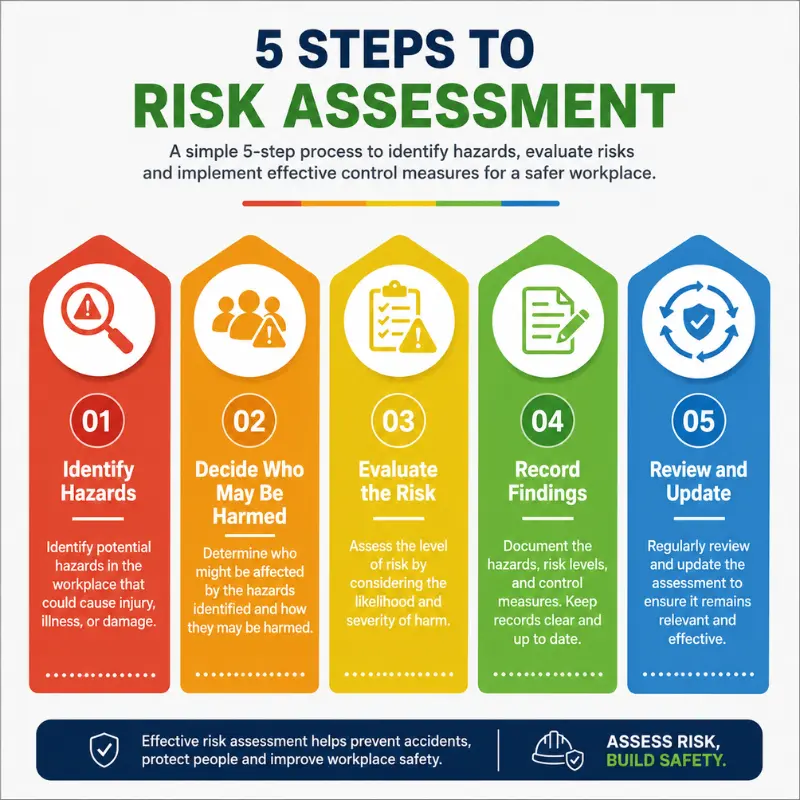
✔ 5 steps to risk assessment:
Identify Hazards
Find anything that could cause harm.
Decide Who May Be Harmed
Recognize workers, visitors or others who may be at risk.
Evaluate the Risk
Discuss the probability and impact of risk.
Record Findings
Document everything properly.
Review and Update
Ensure that the assessment is regularly updated.
These risk assessment steps provide a safe and controlled work place.
Risk Assessment Matrix
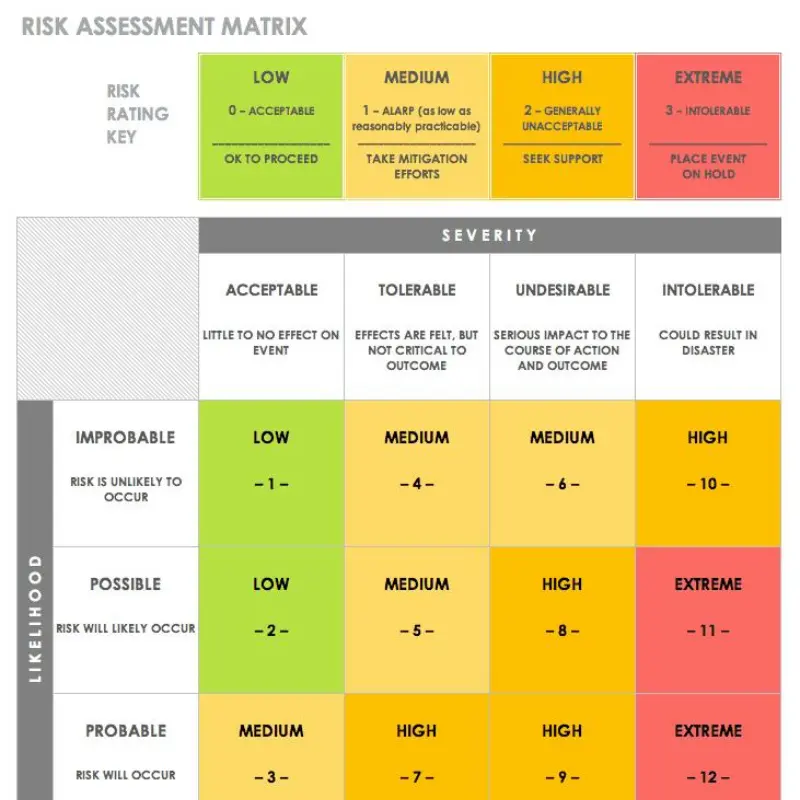
A risk assessment matrix is a tool to determine the level of risk from:
- May happen or not happen (likelihood).
- The importance of the effect (how bad the effect is)
This can assist the organization in determining which risks should be addressed immediately.
Risk Assessment Template
A risk assessment template is a structured template that records hazards, risks and controls.
It usually includes:
- Hazard description
- Risk level
- Control measures
- Responsible person
- Review date
A template helps to maintain consistency and compliance in safety management systems.
Fall Risk Assessment
A fall risk assessment is a procedure which can be used to identify the scenarios where a worker may fall, especially when working at height in construction, maintenance or other activities that involve workers being above ground level.
It helps to reduce serious injuries by providing preventive safety equipment like harnesses, guardrails and training.

Risk Assessment Example
A simple risk assessment example:
- Hazard: Wet floor
- Risk: Slipping and injury
- Control: Warning signs and cleaning schedule
This shows how risk is identified and controlled in real situations.
Conclusion
To ensure safety in the workplace and to minimise risks, a proper risk assessment is necessary. Whether it’s knowing what is a risk assessment or what is a risk assessment matrix, or if it’s using a risk assessment template, whatever it may be, it all helps to create a safer working environment.
Organizations in Saudi Arabia are increasingly adopting structured safety risk assessment systems to comply with international standards and improve workplace safety performance.
Frequently Asked Questions
1. What is a risk assessment?
A risk assessment is the activity of identifying hazards, assessing the potential risk and taking measures to minimise or manage the risk to make the workplace as safe as possible.
2. Why is risk assessment important?
Risk assessment helps prevent accidents, protect employees, reduce workplace hazards, and ensure compliance with safety regulations and industry standards.
3. What are the 5 steps to risk assessment?
The 5 steps to risk assessment are:
1. Identify hazards
2. Identify possible victims of the hazard action plan.
3. Review and assess risks and controls
4. Record findings
5. Review and update assessment
4. What is a risk assessment matrix?
A risk assessment matrix is a way of quantifying risk based on how likely it is to occur and how serious it is. It assists organizations in prioritizing the safety actions and control measures.
5. What is a risk assessment template?
A risk assessment template is a standardized form to document hazards, risk assessment, and measures to control the risks.
6. What is a fall risk assessment?
A fall risk assessment allows for the identification of an activity that a person may be at risk for falling into and allows for implementation of steps to prevent fall related injuries.
7. What are the different types of risk assessment?
There are various types of risk assessments, such as qualitative, quantitative, generic, site-specific and dynamic risk assessment. These are used in various work contexts.
8. Is risk assessment a way of making the workplace safer?
Yes. A safety risk assessment can be used to help an organisation detect hazards early, minimise risks, enhance safety performance and ensure a safer working environment for all.